


I had a chance to hear Laura Modi speak at DCSTW and I fangirled so hard.
My fellow volunteers, mostly college students, were like “Laura who?” and so I made it my mission to tell them why I love her brand and all that it has done to change the conversation for women entrepreneurs, mother-as-consumer (hi Allison at Mother Ventures!) and maternal mental health.
They were high-fiving me when I dashed into her fireside chat and sat on the very front row, nodding and feeling like I had scored VIP tickets to the business equivalent of the Eras tour.
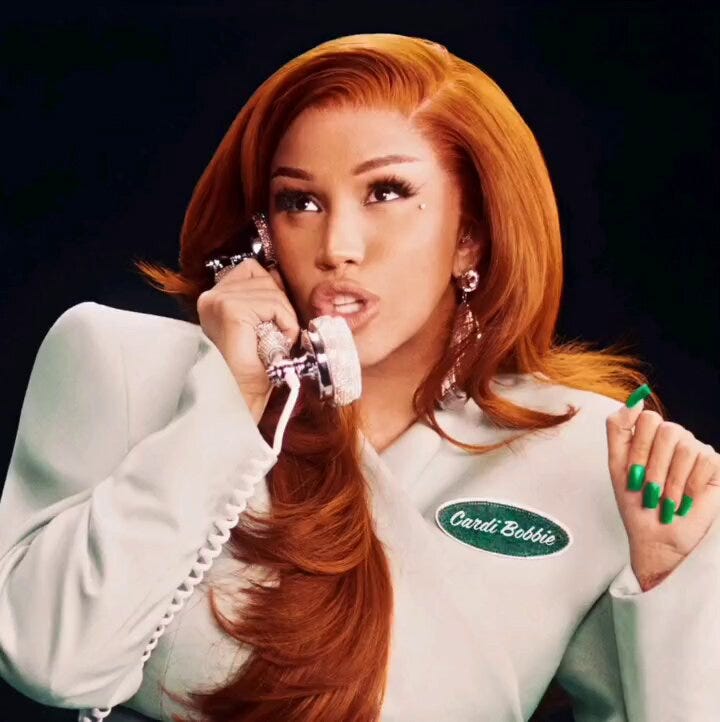
This week, one of the newsletters I receive published a piece about Bobbie’s partnership with Cardi B that stopped me in my tracks. Their anger was intense.
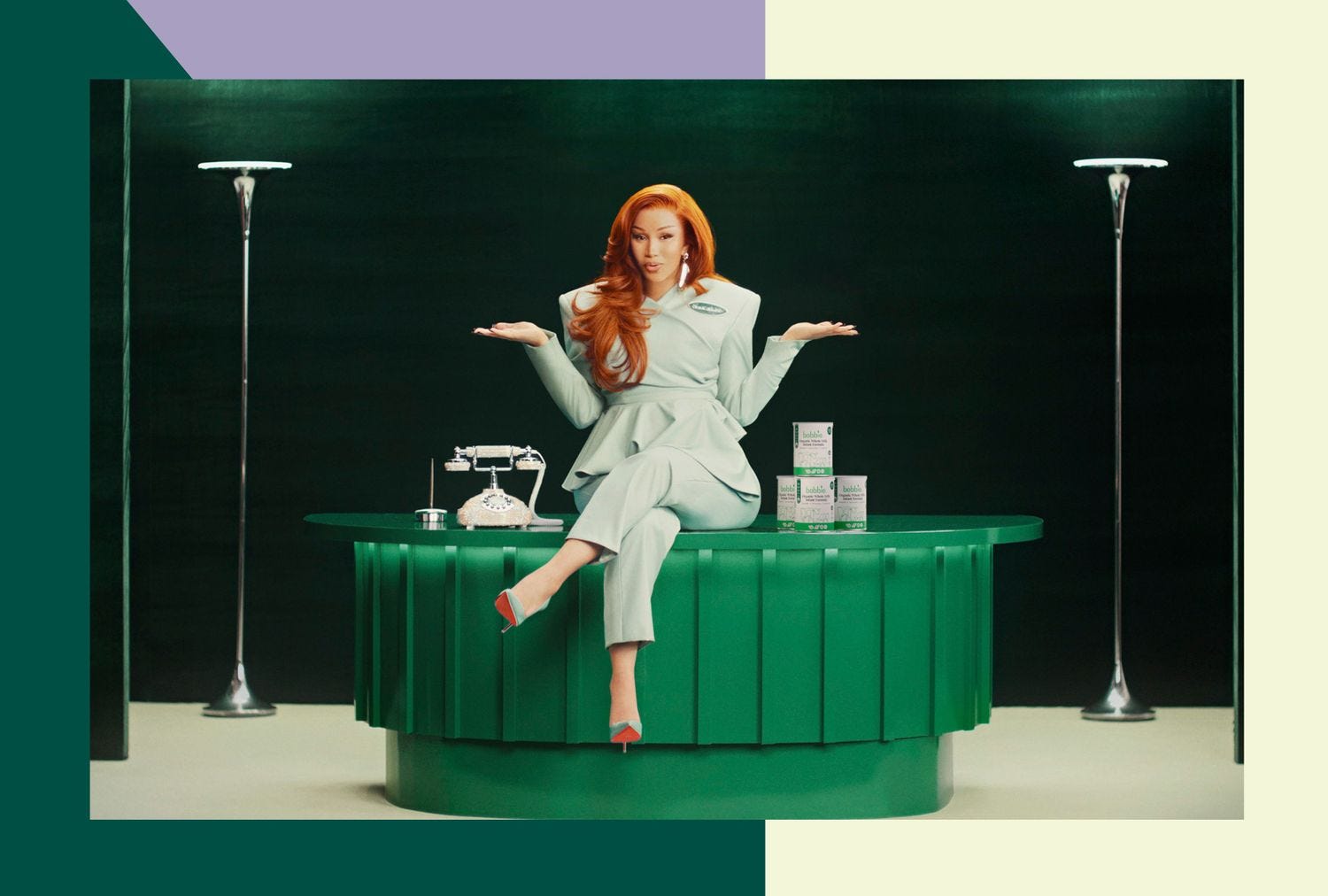
A quick skim through the recommended posts showed me that it was part of a longstanding feud they had with Bobbie, which basically boils down to this: Bobbie shouldn’t advertise. They believe Bobbie is trying to grow the overall formula-feeding market (at the expense of breastfeeding) rather than just grow their share (currently ~4%) of the existing market.
To them, any formula advertising inherently “disparages breastfeeding.”
I kept thinking about this. About what I know of Laura Modi’s story—the 64 “nos” before someone would fund her, the three years it took to bring a product to market in a heavily regulated duopoly, the decision during the formula shortage to stop taking new customers so existing families wouldn’t run out.
That’s a founder who understands what mothers actually need, not one optimizing for profit alone.
When did advocating fiercely for breastfeeding start to require tearing down women-led companies de-stigmatizing choice?
Here’s what I replied (unedited for authenticity):
“I love that you are standing up for breastfeeding and pointing out that Cardi B tried both.
The reality is that many moms try both. Even those who deeply desire to EBF often cannot, or cannot do it for a full 12 months.
The founder of Bobbie was breastfeeding herself when mastitis forced her to buy formula, and she felt guilty for feeding her baby palm oil and corn syrup. That was her inspiration.
I think this anger against Bobbie fuels the pit-women-against-women myth that holds us all back. [Edit: Hi Reshma Saujani!]
I’m disappointed that you’ve framed Bobbie as a paragon of male-funded “corporate greed.” Here’s the truth: Bobbie may be funded largely by men because men hold the purse strings in our country. Find me a company that isn’t. But it’s FOUNDED and led by women - and currently holds just 4% of the market.
Their company and brand is a success story for women and for moms. They showed that when a company is created to meet the needs of mothers, it can be a commercial success.
During the formula shortage, they actually stopped taking new sign-ups so they could meet their promise to supply formula for the first 12 months of the lives of the babies of their current subscribers. That’s the opposite of corporate greed- that’s understanding that moms need a solution not just for the next meal but for their whole feeding journey. The CEO (a woman) made that call AGAINST the advice of her funders. Another reason to support their commercial success as proof that meeting moms needs is a workable business strategy.
I get that you’re worried this undermines Cardi B’s stance as a breastfeeding advocate. But what moms really need is less black-and-white thinking, less putting us into boxes. What we all really need is to be allowed to hold multiple identities at once: mother, performer, artist, writer, wife, breastfeeder, formula-feeder, board-member, etc.
I hope you’ll reconsider how to move beyond polarity in the way we further the conversation around these topics that profoundly impact women’s lives, self-confidence, practical day-to-day existence, and self-worth.”
I don’t know what I was expecting in response (probably nothing), but I did get one:
“Ads like Bobbie’s are banned throughout the globe due to its negative impacts on maternal health and newborns. This issue is not about identities of mothers but who stands to benefit to most when breastfeeding is disparaged. And its not even the moms who work at Bobbie, it’s male investors who cash in on women’s breastfeeding struggles. The anger aint going anywhere.”
This piqued my curiosity. I looked into it.
“Thanks for helping me get educated on this. While I didn’t find any instances of Bobbie’s ads specifically being banned anywhere, I did review this report on the implementation (2024) of the WHO’s code regarding the promotion of breastmilk alternatives (1981) and this follow-up re: digital advertising (2022).
It was interesting to see the genesis of the 1981 ban -- that powdered formula was being promoted in places without access to clean water. This is also one of the reasons the WHO recommends breastfeeding for 2 years (safeguards children against contaminants in water in many parts of the world.)
What we understand about maternal health and well-being (and what we expect from working mothers in developed nations) has changed radically in the past 44 years.
The reality is that EBF [exclusive breastfeeding] is not possible or realistic for many. It can be true that EBF is best AND true that Bobbie formula is the best alternative in the United States when EBF isn’t possible or feasible. Maternal mental health was not part of the conversation in 1981. It’s in crisis today, in part because we are told we must adhere to aspirational standards that are unrealistic, if not impossible -- in the feeding journey and beyond.
What I don’t agree with is that you equate the promotion of formula with “disparaging breastfeeding.” This is why I suggested you might reconsider the “polarity” (black-and-white thinking) of this perspective. Is promoting a formula brand automatically equivalent to disparaging breastfeeding?
The existence of better formula is a win for parents and babies who end up going that route, which is 74% according to the 2024 State of Feeding report (in spite of the 44-year ban). Something other than advertising is driving that usage.
I totally agree breastfeeding needs to be easier and we need structural changes to make it so. Bobbie says so too! They are one of the loudest voices pushing for paid leave in the U.S., which I personally think would be the biggest structural change supporting maternal mental health, children’s wellbeing, and the length of time breastfeeding continues.”
I understand why this tension exists. Breastfeeding is vital, vulnerable, and historically under-supported. There’s no breastmilk industry lobbying on its behalf—only formula companies with massive marketing budgets. That power imbalance is real, and vigilance against it matters.
And yet: most parents use formula at some point before month 12.
Breastfeeding is beneficial and rewarding, yet very difficult at times - leaving new mothers vulnerable to advertising messages. We should be thoughtful about the messages they are served. Still, real practical issues like inadequate paid leave, lactation support deserts, insufficient supply, mastitis, mental health crises—these are driving formula usage far more than any advertising.
When the vigilance meant to protect breastfeeding turns into attacking women-led companies supplying choice to the majority of parents who need formula, I have to ask: who does this actually serve?
Not the mothers trying to breastfeed, who still need structural change.
Not the mothers using formula, who don’t need more shame.
Not the women entrepreneurs trying to build something better.
Just the system that’s failing all of us—because as long as we’re fighting each other, we’re not fighting for the policies that would actually help.
The formula industry is exploitative, predatory and deceptive. Their marketing is full of lies and omission of facts and they don't list the risks on the packaging. Women struggle with breastfeeding because we don't have paid leave, we don't have enough support and we pretend that formula is 'fine' when in fact it increases the risk of illness and death for mother and baby. When a substitute is actually required, a wealthy country like the US needs to have more screened milk available. The risks of formula mean that how we feed our babies is not just a lifestyle choice.