


Yes, this is our March Discussion Club — I know, I know, it’s April 10. But the delay is for a good reason: inspired by conversations like this one with Emily, I’ve officially set up the Discussion Club as a podcast. The Third Shift: On the Mental Load is now available on Apple Podcasts and Spotify. Join us hands-free!
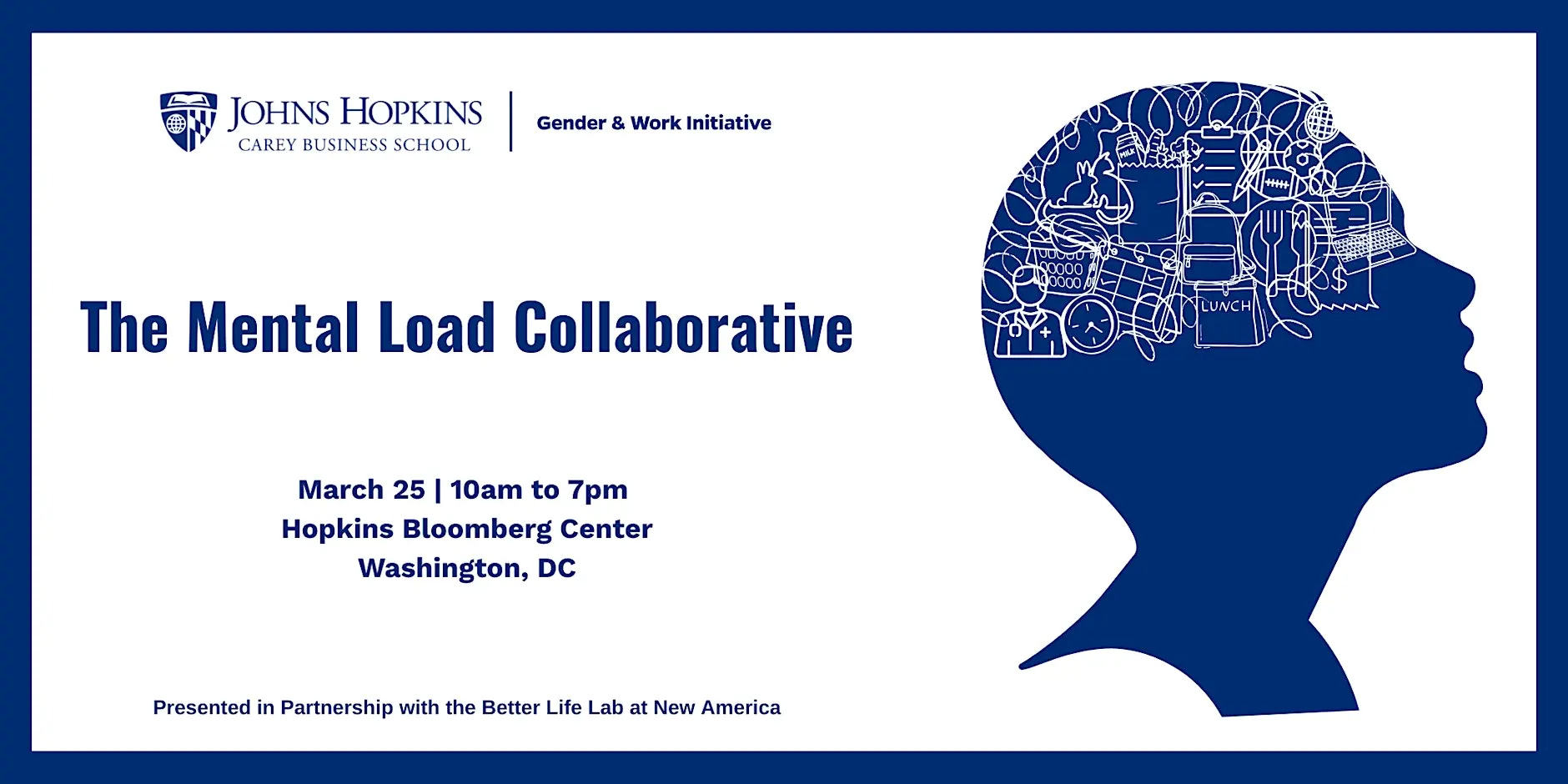
This month instead of a book, we’re debriefing the Mental Load Collaborative in Washington D.C., a gathering of people who are all, in different ways, working on the mental load problem — sociologists, stress researchers, entrepreneurs, and some of my favorite Substack writers, including Laura Danger, Paige Connell, Molly Dickens, PhD, Haley Swenson, and Laura Cunningham.
One of the people I had talked to but never previously met in-person was Emily King, CEO and Founder of Faye — a service that connects busy families with local advisors who handle personal admin tasks. I’ve been a Faye customer (and raving fan) for a while, so I was thrilled to spend time with her. Emily spoke on a panel at the event, and she graciously agreed to sit down with me afterward for a debrief.
Here are the highlights:
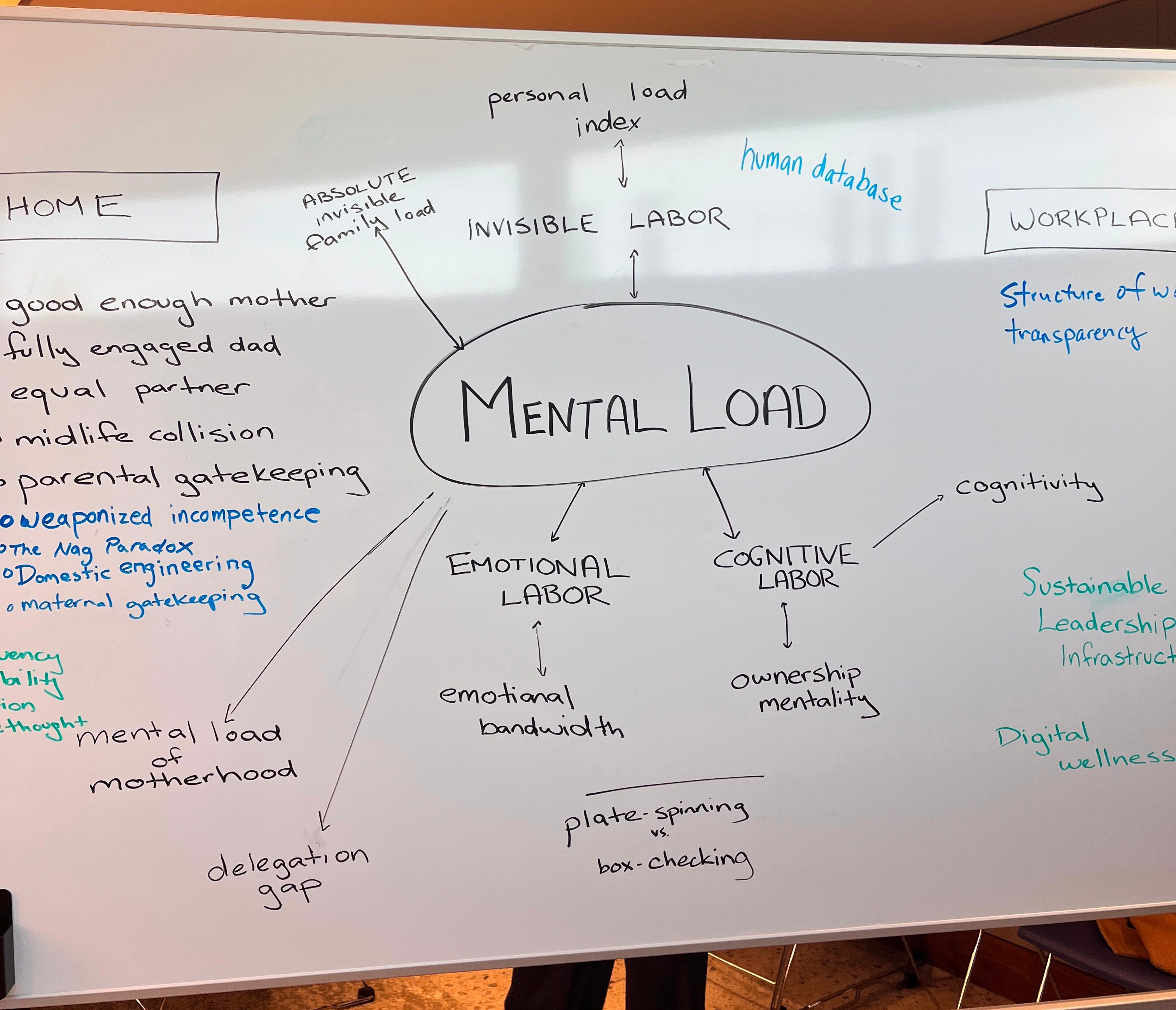
The mental load is intensifying. On the closing panel, Allison Daminger pointed to compounding societal stressors — COVID, geopolitical instability, AI anxiety — as the backdrop against which the mental load has become impossible to ignore. The argument: so many destabilizing things have happened in quick succession, felt most acutely by parents who are simultaneously raising new humans through all of it. (My take: it’s less due to macro conditions, and more because the overall volume of per-person admin has skyrocketed, and moms do it for the whole family.)
How long a task takes to accomplish doesn’t determine how heavy it feels. A five-minute phone call to reschedule a dentist appointment can occupy more mental real estate than an hour of focused work — because of guilt, dread, and emotional weight attached to it. This is why outsourcing isn’t strictly about buying back time – it’s also about buying back bandwidth.
Outsourcing isn’t strictly about buying back time – it’s also about buying back bandwidth.
As the CEO of a company that enables delegation, Emily thinks a lot about this. As she put it, “The perceived value of delegation has almost nothing to do with how long the task takes.”
There’s no standard way to measure the mental load yet. We agreed that this is a place where a cross-disciplinary lens is helpful. The right tool is one people will complete — and it should tell them something actionable on the other side, not just give them a score.
The mental load is gendered, and one reason is social consequences: across most domains of family life, women have traditionally paid the consequences when the ball is dropped. The person who owns a domain tends to be the one who faces judgment when it goes wrong. Allison Daminger’s research showed that men who claim selective incompetence around household tasks are often in professional roles that demand exactly the same skills — such as project managers and pediatric cardiac surgeons. The only difference is where they choose to apply them.
Men who claim selective incompetence around household tasks are often in professional roles that demand exactly the same skills — such as project managers and pediatric cardiac surgeons. The only difference is where they choose to apply them.
Recognizing the mental load as real work is a moral imperative. Women who leave the workforce because of the mental load lose their income, their professional trajectory, and often their ability to re-enter at the same level. That’s not a personal failing. It’s the cost of a major problem that hasn’t been taken seriously. The elements that compose the mental load are not “little things;” these are, collectively, a really big thing with a substantial impact.
I want to say again: the workload of family life is not “little things.” So often women who try to explain their overwhelm find it difficult to convey, even to themselves, because each aspect — a phone call to the dentist, a birthday gift to buy, an event to calendar — feels individually small. And yet, what the conversation about the mental load helps us do is find the words to share why merely anticipating the need to buy a gift (not to mention the research, decision making, execution, and social monitoring that follows) is draining.
We ended the day with a panel of builders who are working on solutions to “make the mental load solvable.” Emily was one of them. If you’re feeling the weight of a thousand feather-light admin tasks collectively weighing you down like a ton of bricks, Faye might be just the thing to lighten your load. (You can try it for 20% off using THIRDSHIFT20). I recommend Faye because it works — I use it myself. Having a real human accountable for your tasks makes all the difference between “help in name only” and true relief.
If you’re not sure what you’d delegate, subscribe. In upcoming posts, I’ll be sharing more about what I delegate, how to decide what you should delegate, and how to delegate so that it is actually a mental load relief (and not just another set of tasks to track.)
Warm wishes,
Jennifer
This post is part of the Mental Load Discussion Club, a subsection of The Third Shift where we engage with the books, scholarship, and wider conversation surrounding the mental load. (It’s also where new On the Mental Load podcast episodes are shared with exclusive recaps and analysis, such as this one.)
If you prefer to focus on practical solutions for family operations and opt out of the mental load learning, you can separately unsubscribe from the Discussion Club while remaining subscribed to The Third Shift.
You Might Also Like

Show Notes
Episode : The Mental Load Is Getting Worse: A Debrief with Emily King of Faye
Jennifer Mickel sits down with Emily King, founder of Faye, for a candid debrief after the Mental Load Collaborative event at Johns Hopkins Carey School of Business in Washington, D.C. They explore why the mental load has intensified in recent years — driven by digital overwhelm, AI adoption, and post-COVID stress — and what it would take to actually measure it. Plus: the gender dynamics behind who carries the cognitive and emotional load at home, and why recognizing invisible labor as real work matters for women’s participation in the workforce.
Guest
Emily King, CEO & Co-Founder, Faye — findfaye.com
Resources Mentioned
Drained by Leah Ruppanner — bookshop.org
Fair Share by David G. Smith & W. Brad Johnson (June 2026) — amazon.com
What’s On Her Mind by Allison Daminger — bookshop.org
“Why Women Still Can’t Have It All” by Anne-Marie Slaughter, The Atlantic — theatlantic.com
Molly Dickens, PhD, The Maternal Stress Project — maternalstressproject.substack.com
About the Show
The Third Shift: On the Mental Load is a podcast about the invisible cognitive and emotional work of running a family — why it’s so hard to see, so hard to share, and what it would actually take to change it. Hosted by Jennifer Mickel, JD-MBA, founder of The Third Shift and former BCG Principal.
Work with Jennifer
The Third Shift helps families get out from under the mental load. Learn more at www.thethirdshift.co.


